
Built by an amputee, for amputees — because nobody else was building what we needed.
This is the story of how a highway engineer became a bilateral amputee, then built a company to solve the daily problems no one else was solving.
Built by an amputee, for amputees — because nobody else was building what we needed.
This is the story of how a highway engineer became a bilateral amputee, then built a company to solve the daily problems no one else was solving.
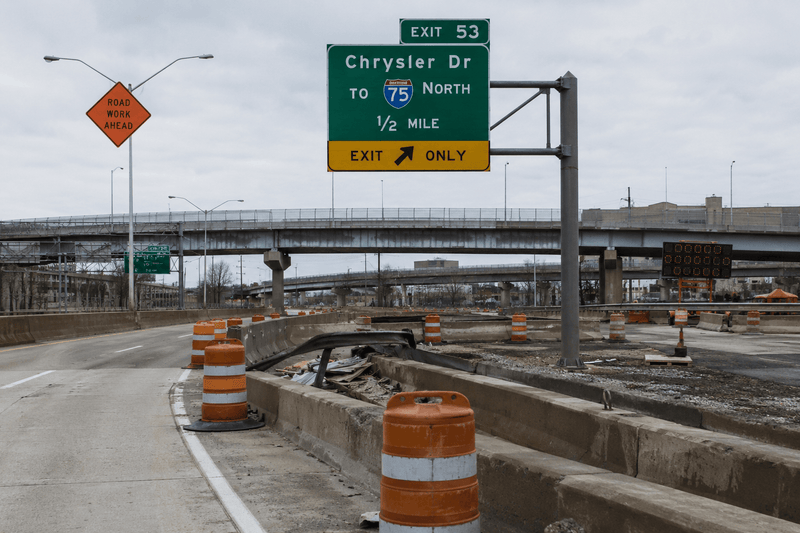
It started with a highway construction zone outside Detroit.
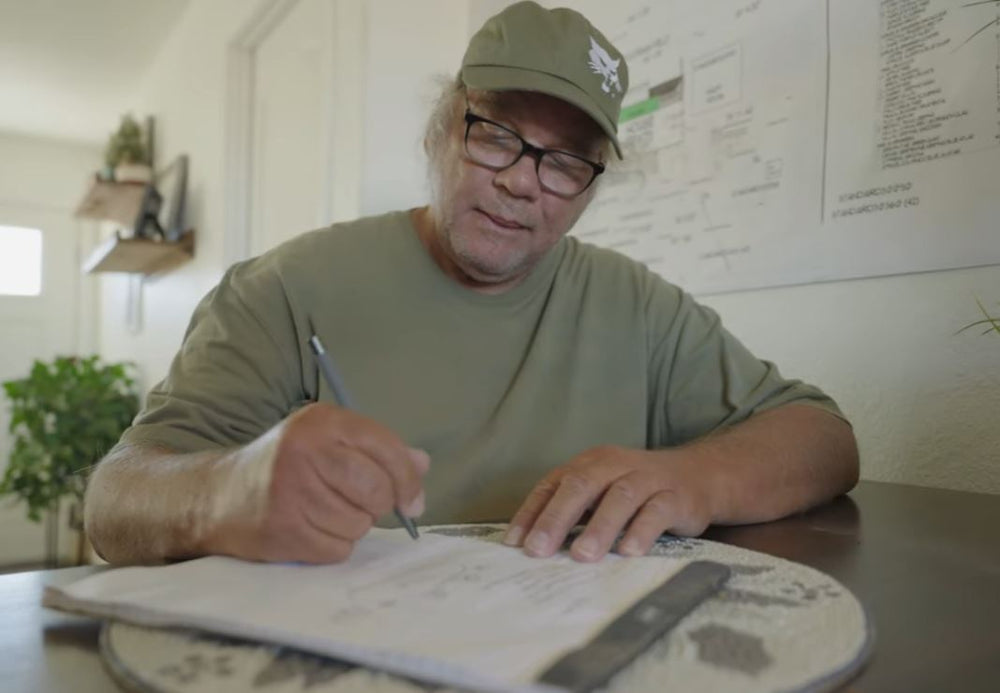
Before Able Motion existed, before SleevSaver was a product, before VitalFit had an amputee community to serve, Bill Hattan was a highway safety engineer working on a road shoulder outside Detroit. He'd built a career around intelligent transportation systems — designing the software and infrastructure that keeps people safe on the road.
On the day of the accident, a motorist hit Bill's work site at 80 miles per hour. His co-worker was killed instantly. Bill was thrown roughly 70 feet over an embankment and onto the road below.
The injuries were catastrophic. Over the months that followed, Bill would undergo 60 to 70 surgeries, spend 75 days in a coma, lose 30 units of blood (the human body holds six), be tracheotomized, ventilated, and have his jaw wired shut. The medical team was pumping blood into him as fast as he was losing it.
This is the part of the story most companies wouldn't put on their About page. Bill includes it for one reason: every product his company makes exists because of what came after this moment. The story can't start with the products. It has to start here.
The night a nurse said "You're still here."
When Bill emerged from the 75-day coma, the first thing he saw was a string of his daughters' photographs hung above his hospital bed. They had put them there in the days he was unconscious, so that if he woke up, his children's faces would be the first thing he'd see. They were.
There was one night in the ICU — jaw still wired shut, barely able to talk — when Bill told the nurse next to him that he thought he was going to die. He couldn't have been clearer about it. She told him:
Every hour through that night, Bill would wake up, and the nurse would still be there, and she'd say the same line:
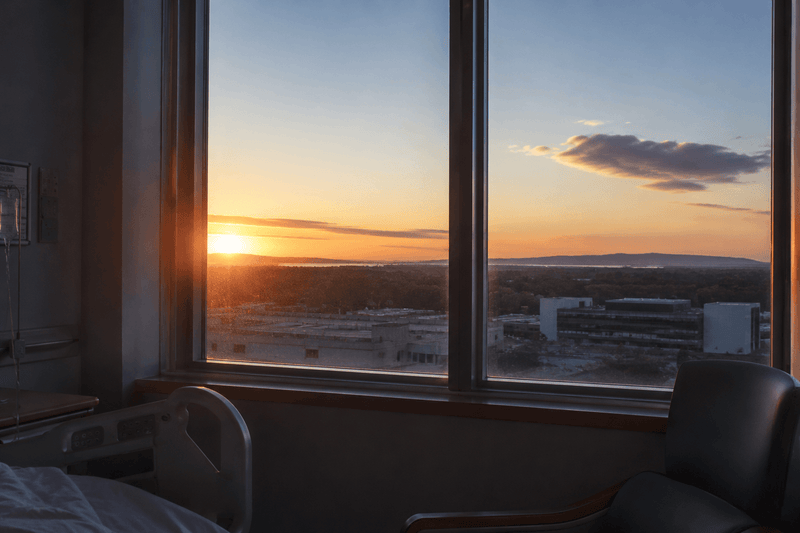
When the sun came up the next morning, Bill knew he was going to survive. Bill credits that night with bringing him closer to his faith — a turning point that he says shifted everything about the recovery that followed. From that morning forward, the trajectory changed.
Bill spent four months in the hospital before being discharged. By the time he went home, he was walking with a cane — sometimes without one. The recovery had become its own kind of work, and Bill was good at work.
Then his orthopedic surgeon called with news he wasn't expecting.
Months after his discharge — walking, working, pushing himself hard — Bill woke up one morning in excruciating pain. He called his orthopedic doctor. She told him to come in immediately.
The tests came back clear. Both legs had developed osteomyelitis — a serious bone infection in which the bones themselves had begun to die. The doctor explained the only path forward: bilateral amputation of both lower limbs. The infection spreads quickly. There was no time to debate.
Bill went to the University of Michigan Medical Center for a second opinion. The chief of orthopedic surgery confirmed the diagnosis. Within a week, Bill was in surgery for both amputations, performed in a single procedure at his request — he didn't want two separate recoveries.
After surgery and the months of swelling that prosthetic fitting requires, Bill checked himself into rehabilitation. The standard schedule was two hours of therapy per day. Bill asked his physical therapist — who he nicknamed "Coach" after learning he was a high school wrestling coach — if he could spend the entire day in the therapy room. Coach said yes.
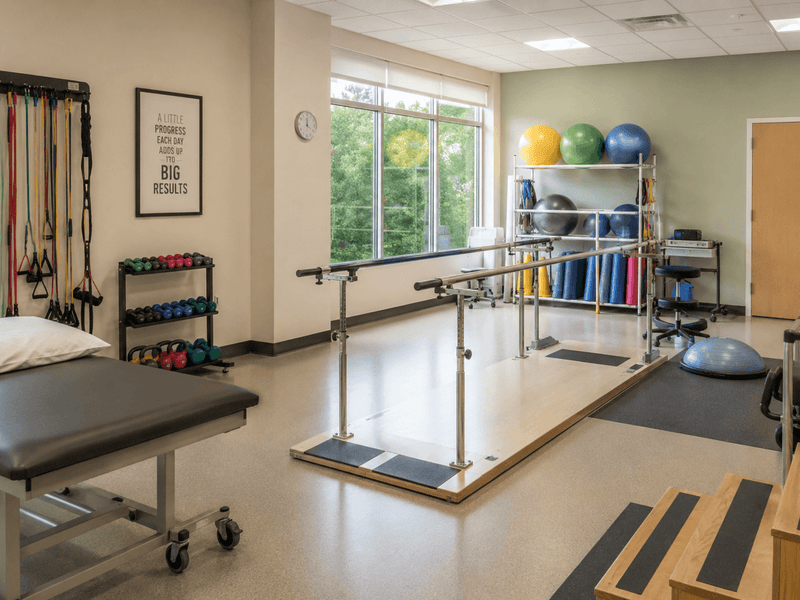
The doctor's estimate had been three to four months to learn to walk on prosthetics. Bill walked out of rehab in two weeks. Before he left, he brought pizza for the entire staff and pushed Coach out the door in the wheelchair he'd arrived in.
On Bill's last day in rehab, another patient — a school teacher who'd become a paraplegic in a rear-end collision — wheeled over to him. She'd been quiet through her time in the unit, withdrawn, certain her life was over. She told Bill:
Bill remembers that conversation as the moment he understood his recovery wasn't just about him.
$6,000 a year in suspension sleeves — and a wife who said there had to be a better way.
Bill moved to Arizona after the recovery. The Michigan winters had become impossible — wheelchair work outdoors in cold weather doesn't work. In Arizona, he met Julie online, married her, and met his new prosthetist, Dennis Leal at Hanger.
Dennis took one look at Bill's setup and made a recommendation: switch from a pin-lock suspension system to elevated vacuum. "You're way too active for a pin-lock," he said. Bill made the switch and loved it — the elevated vacuum system was a substantial improvement in comfort and mobility.
There was one problem. The trim line at the top of the carbon-fiber socket — the sharp edge where the socket meets the leg — was wearing through Bill's suspension sleeves at an alarming rate. Pinholes would form. The vacuum seal would fail. The sleeve would have to be replaced.
Suspension sleeves run $200 to $300 each. Bill was burning through roughly $6,000 a year in replacements. "This is not sustainable," he told Julie.
Julie searched online and found a product that claimed to solve the problem. They ordered it. "It was junk," Bill says. "Absolute junk."
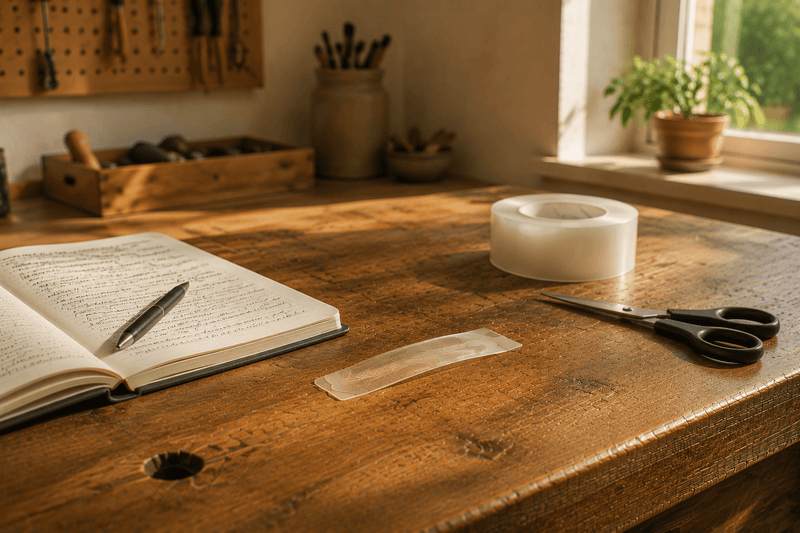
But the concept made sense. So Bill took the product apart, studied what it was trying to do, and built a better version himself — working at his kitchen table, sourcing different materials, refining the adhesive formulation.

A few weeks later, Bill went to Dennis for a routine adjustment. Dennis was walking down the hall when he stopped, turned around, and came back into the room.
Bill explained. Dennis asked if he could have some. Bill cut off a few pieces from the parchment paper he was using to store it. Dennis said he wanted to try it on other patients.
Three weeks later, Bill returned to the clinic. Dennis pulled him aside. He'd put Bill's adhesive on a carpet layer, a roofer, a framer, a runner. They'd all come back asking the same question: where can we buy this?
That was the moment SleevSaver became a company.
From a kitchen table to nationwide distribution.
Bill's career in highway safety engineering turned out to be exactly the wrong-but-right preparation for building a medical device company. He'd spent decades writing software, developing intelligent transportation systems, and turning solutions into products. The skills transferred directly. He knew how to take a working concept and make it manufacturable, repeatable, and reliable.
Bill patented the SleevSaver mechanism. He set up domestic manufacturing. He approached the major prosthetics distributors. Hanger Clinic tested it and signed on. Cascade Prosthetics followed. SPS, the leading distributor for prosthetists, came next. Within a few years, SleevSaver was carried by the distributors that serve the substantial majority of U.S. prosthetic clinics.
At the Amputee Coalition's national conference a couple of years back, Bill set up a booth with a single product on display — SleevSaver. A bilateral amputee woman approached. She was wearing elevated vacuum suspension. "You're my perfect patient," Bill told her, and explained how SleevSaver wraps the trim line.
Her eyes welled up.
Bill applied a SleevSaver on the spot. She walked away. Thirty minutes later she came back to his booth, threw her arms around him, and started crying.
That moment captures what Bill says drives the company. The amputee community, in his words, runs disproportionately on Medicare and Medicaid. Many amputees can't afford the equipment they need. Building products that meaningfully reduce that burden — not by lowering price-per-unit but by extending what amputees already own — is what makes the work matter.
From one product to a system. From a problem to a company that solves them.
Bill's plan was never just SleevSaver. The goal was always a family of products — practical solutions for the daily problems no one else was solving.
The first expansion came from a personal habit. Bill had been a customer of Skin Resource MD's amputee skin care line for years. The formulas worked in ways drugstore products didn't. When the line became hard to find, Bill reached out to Jamie at Skin Resource MD directly. The line became VitalFit, distributed exclusively by SleevSaver.
More products are coming. Each one starts the same way every product at Able Motion starts — with a problem Bill or someone in the community has actually lived.
Built by amputees, for amputees. We mean that.
Amputees are a community. Bill has said this in every conversation about why the company works. One amputee instantly understands what another amputee is talking about — the daily friction, the equipment costs, the products that almost work, the small frustrations that compound. That shared experience is the foundation Able Motion is built on.
Bill isn't selling to amputees. He's part of the community building solutions for itself.
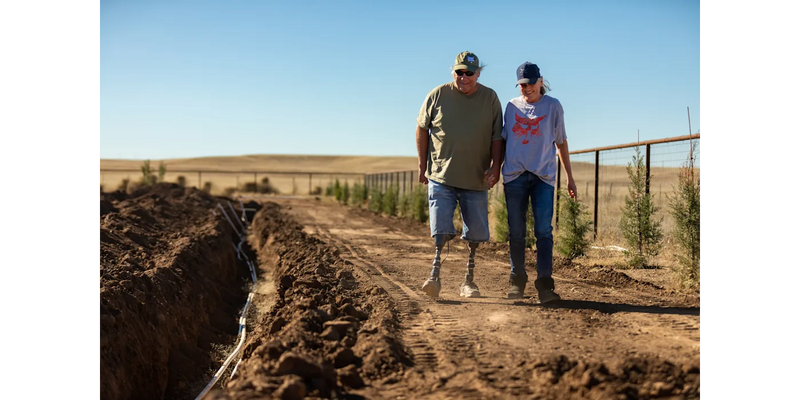
"Jamie at VitalFit said something to me that stuck," Bill says. "She said, 'Bill, I can stand in a booth and tell people how great this product is. But you live it. You live it every day.'"
That's the difference. Bill wears elevated vacuum. He deals with the trim-line problem. He uses VitalFit on his own skin. The credibility doesn't come from marketing. It comes from being in the same situation as the people the company is building for.
Every product Able Motion makes or distributes meets the same standard: it has to be a real solution to a real problem amputees face. "High quality, serves a purpose, not gimmicky," as Bill puts it. The reason the catalog hasn't grown faster isn't lack of opportunity — it's lack of products that meet the standard.
That's the brand. Not a slogan, not a marketing position. A relationship between a company and a community where the founder is part of both.
If you're an amputee reading this, that's what we're trying to be.
Where to go from here.
Get the launch list.
Be first to know when new products drop, plus practical tips for daily prosthetic life — written by amputees, for amputees.